Coffee is one of the most traded farm products in the world. It supports millions of farmers and plays a key role in many national economies. A few countries lead coffee production and strongly influence global coffee exports, prices, and supply.Read on to learn which country truly leads global coffee production and exports.
Largest Coffee-Producing Countries
Coffee production by country is highly concentrated. A small group of coffee producing nations drives global coffee exports, world supply levels, and international pricing. Based on total production volume, the ranking is as follows.
1. Brazil
Brazil remains the largest coffee producer in the world. It produces approximately 65 million bags, accounting for about 37 percent of global production. Brazil grows both Arabica and Robusta, though Arabica forms the majority of its exports.
Despite periodic weather challenges that reduce Arabica yields, Brazil’s scale keeps it far ahead of competitors. Its production system includes large mechanized farms, advanced logistics, and strong export networks.
Key production strengths include:
- Massive cultivation area
- High productivity per hectare
- Strong port infrastructure
- Diversified Arabica and Robusta supply
Brazil’s dominance directly impacts global coffee supply and demand, as even small production changes can shift global prices.
2. Vietnam
Vietnam produces about 31 million bags, ranking second globally. It is the world’s Robusta production leader and plays a major role in instant coffee and commercial blends.
Vietnam’s rise is built on:
- Intensive farming techniques
- High yielding Robusta varieties
- Competitive export pricing
- Strong trade partnerships
Vietnam’s growth has reshaped Arabica vs Robusta production balance worldwide. When Robusta demand rises, Vietnam strengthens its global position quickly.
3. Colombia
Colombia is globally recognised for high-quality washed Arabica coffee. Its mountainous regions provide ideal altitude and climate conditions. While Colombia does not compete with Brazil in volume, it commands strong prices in speciality markets. Its coffee export statistics reflect steady demand from North America and Europe. Colombia’s reputation supports stable global trade value.
4. Ethiopia
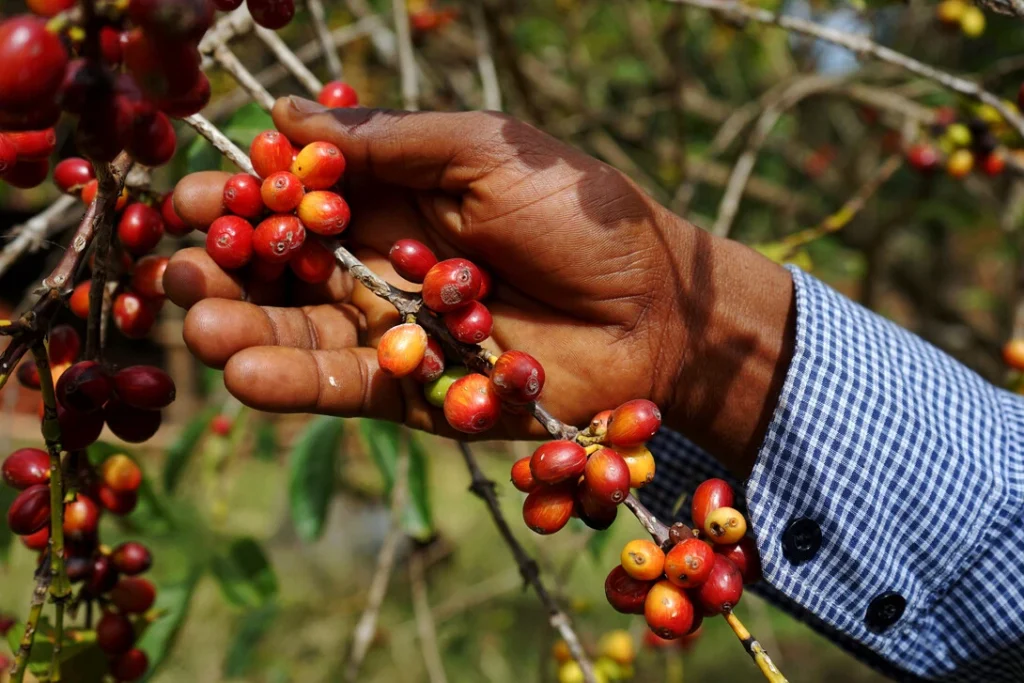
Ethiopia is Africa’s largest coffee producer and a top five global supplier. As the birthplace of Arabica coffee, Ethiopia plays a central role in specialty coffee producers worldwide.
Production is rising and contributing to record global supplies. In a recent fiscal reporting period, Ethiopia earned approximately 762.75 million dollars by exporting 113,542 tons of coffee within three months. This represented a 47 percent increase in export revenue compared to the previous year, driven largely by stronger Arabica prices.
Ethiopia exports to more than 84 countries. Its leading markets include:
- Saudi Arabia with 18.4 percent share
- Germany with 16.9 percent share
- Belgium with 9.6 percent share
Ethiopia coffee exports continue expanding due to high altitude cultivation, strong global demand for specialty Arabica, and rising green coffee beans export volumes.
Unlike Brazil and Vietnam, Ethiopia’s production is largely smallholder based. This creates traceable supply chains that appeal to specialty buyers and premium roasters.
5. Indonesia
Indonesia holds a stable place in global production. It supplies both Robusta and specialty Arabica varieties. Export gains from Indonesia help offset possible production dips in Brazil, stabilizing global coffee exports.Indonesia strengthens supply diversity in global markets, especially across Asia and Europe.
Global Coffee Production
World coffee production is forecast to reach approximately 178.8 million bags, reflecting record high supply levels. Global coffee exports are projected to increase to around 123.8 million bags, supported by gains from Vietnam and Indonesia.
According to data from USDA Foreign Agricultural Service and International Coffee Organization, production growth is driven by:
- Higher Robusta output in Vietnam
- Rising specialty demand benefiting Ethiopia
- Improved farm yields in several producing nations
- Expanding coffee import markets in Asia and the Middle East
However, Arabica production decline in Brazil due to weather cycles creates volatility. Since Brazil accounts for 37 percent of global output, any fluctuation influences global coffee trade data and pricing.
Ethiopia’s record output contributes significantly to balancing global supply, especially in premium Arabica segments.
Who Leads Global Coffee Exports
Brazil remains the top exporter of coffee by volume. Its export scale shapes global coffee export statistics and trade flows.
Vietnam ranks second, supplying large quantities of Robusta to industrial buyers. Indonesia supports export growth, while Ethiopia strengthens African coffee exports with rising revenue and expanded market reach.
Ethiopia’s export growth stands out because it combines increasing production with higher unit prices. This means export revenue growth is not only volume driven but also price driven.
Export leadership depends on several factors:
- Total production volume
- Global demand for Arabica vs Robusta
- Currency strength
- Efficient logistics
- Stable trade policies
Brazil leads in overall exports, but Ethiopia leads Africa and remains one of the fastest growing exporters in speciality segments.
What Drives Global Coffee Leadership
Leadership in global coffee production depends on structural and environmental factors.
Climate and altitude determine yield and quality. Brazil benefits from large flat areas suitable for mechanization. Ethiopia benefits from high altitude zones that enhance Arabica quality. Vietnam benefits from climate conditions ideal for Robusta farming.
Production dominance also depends on:
- Infrastructure and ports
- Access to financing and technology
- Export oriented policies
- Global consumption growth
- Ability to manage supply shocks
Ethiopia’s competitive advantage lies in its identity as the origin of Arabica. Its coffee commands premium positioning in specialty markets. As global demand shifts toward traceability and quality, Ethiopia strengthens its role beyond simple volume metrics.
Which Country Produces the Best Coffee
The best coffee depends on the buyer’s goal. Volume buyers focus on scale and pricing, while specialty buyers focus on flavor and origin.
Brazil offers reliability and consistent supply. Vietnam provides strong caffeine content and cost efficiency through Robusta production. Colombia delivers clean, washed Arabica with consistent flavor. Ethiopia supplies complex, high altitude Arabica with strong specialty appeal.
Ethiopian coffee often achieves premium prices due to:
- Unique regional profiles
- High altitude cultivation
- Distinct floral and fruit notes
- Strong global specialty demand
In terms of quality recognition, Ethiopia and Colombia often dominate specialty rankings. In terms of volume dominance, Brazil leads without competition.
From Volume to Value in Global Coffee Leadership
Brazil continues to lead global coffee production and exports through unmatched scale and strong global reach, while Vietnam reinforces its role as the dominant Robusta supplier supporting large segments of the international coffee market. Ethiopia, however, reflects a shift from volume to value, standing as Africa’s largest producer and a leading global supplier with growing premium Arabica exports and expanding international demand. As global supply remains strong, leadership is no longer defined by output alone, but also by export value, quality positioning, and long term market influence, where Ethiopia is steadily gaining ground.
Trusted Coffee Exporter in Ethiopia
If you are looking for a reliable global coffee exporter, AMG coffee exporter is your trusted partner from origin to destination. As one of Ethiopia’s leading exporters, AMG Coffee supplies premium Arabica beans with consistent quality, strong sourcing networks, and dependable logistics, serving international roasters, traders, and wholesale buyers with confidence.