
Ethiopian coffee exporters and EU buyers must prepare for new traceability and deforestation checks under the EU Deforestation Regulation (EUDR). Importers need reliable farm location data, supplier records and evidence that coffee meets EU requirements. Roasters must also identify their role in the supply chain and the responsibilities that apply to their business. Here’s what you need to know about the regulations, compliance deadlines, documents to request, and checks to complete before purchasing Ethiopian coffee for the EU market.
What Is the EU Deforestation Regulation (EUDR)?
The EU Deforestation Regulation, formally Regulation (EU) 2023/1115, aims to prevent products linked to deforestation and forest degradation from entering the EU market or being exported from it. It covers seven commodity groups: cattle, cocoa, coffee, oil palm, rubber, soya and wood, along with specified products made from these commodities. Coffee is included in Annex I under CN code 0901.
Under EUDR, covered products must meet three core requirements. They must be deforestation free, comply with relevant laws in the country of production, and have the required due diligence completed. Coffee must not come from land where deforestation occurred after 31 December 2020. Importers must collect production location data, assess risks and complete the required declaration before placing covered coffee on the EU market.
How Does EUDR Apply to Ethiopian Coffee?
Ethiopia is currently classified as a standard risk country under the European Commission’s EUDR country benchmarking system. This means businesses sourcing Ethiopian coffee cannot use the simplified due diligence route reserved for qualifying low risk sourcing. They must complete the applicable due diligence requirements and establish that the coffee meets EUDR conditions.
Key implications for Ethiopian coffee businesses include:
- Green and roasted coffee: Coffee covered by CN code 0901 falls within EUDR, whether roasted or unroasted.
- Farm level traceability: Importers need geolocation data for the plots where the coffee was produced.
- Fragmented supply chains: Smallholders, cooperatives, washing stations, brokers and exporters must maintain records that connect production plots to coffee lots.
- Shipment specific evidence: A statement that coffee is Ethiopian, organic or sustainably sourced does not prove EUDR compliance. The responsible EU business must verify the required information for the relevant products.
- Risk assessment: Businesses must assess deforestation and legality risks and take appropriate action before placing covered coffee on the EU market.
What Are the EUDR Compliance Deadlines for Coffee Importers?
Regulation (EU) 2025/2650 revised the EUDR implementation dates. The applicable date depends on the business category and whether a micro or small operator was already covered by the EU Timber Regulation (EUTR).
| Business category | Application date |
| Medium and large operators | 30 December 2026 |
| Micro and small operators established as such by 31 December 2024 | 30 June 2027 |
| Micro and small operators already covered by the EUTR | 30 December 2026 |
EUDR Coffee Requirements for Ethiopian Coffee Importers
- Farm geolocation: Obtain latitude and longitude coordinates for every production plot linked to the coffee. The information must identify where the coffee was grown.
- Plot boundaries: For coffee plots larger than four hectares, provide polygon geolocation that identifies the plot boundary. Smaller plots still require geolocation.
- Production details: Record the country of production, supplier details, product description, quantity and relevant production plot information.
- Deforestation history: Verify that the coffee was produced on land that meets the EUDR deforestation cut off requirement of 31 December 2020.
- Production legality: Collect evidence that coffee production complies with relevant Ethiopian laws.
- Supply chain traceability: Link each coffee lot to its production plots through the relevant farms, cooperatives, washing stations and exporters.
- Risk assessment: Assess deforestation risks, legal compliance, supply chain complexity and the reliability of supplier information.
- Risk mitigation: If the assessment identifies more than negligible risk, take adequate mitigation measures before placing the coffee on the EU market.
- Due Diligence Statement (DDS): Complete the required due diligence and submit the DDS through the EUDR Information System when required for your role.
- Record retention: Keep the required due diligence records for five years.
EUDR Coffee Requirements for Supplier Documents and Traceability
- Farm location records: GPS coordinates or plot polygons in the required format.
- Producer details: Farm identification, producer information and production location.
- Supply chain records: Details of the exporter, cooperative, washing station and intermediaries, where applicable.
- Coffee lot records: Lot identification, product description and quantity information.
- Purchase and shipment documents: Records connecting the coffee lot to its production source and movement through the supply chain.
- Legality evidence: Documents supporting compliance with relevant Ethiopian production laws.
- Deforestation evidence: Geospatial information and supporting records used to assess the production plots against the EUDR cut off date.
- Declaration information: The applicable DDS reference number or simplified declaration identifier, where relevant to the supplier’s role.
- Consistent traceability records: Documents showing that farm, processing, export and shipment information refer to the same coffee or traceable lots.
How Do the Due Diligence Statement and EUDR Information System Work?
The EUDR process requires the responsible business to collect product information, assess risks and complete the applicable declaration before placing covered coffee on the EU market.
- Due Diligence Statement (DDS): The formal declaration submitted by an upstream operator after the required due diligence establishes compliance and negligible risk.
- EUDR Information System: The European Commission’s online system for submitting due diligence statements and applicable simplified declarations.
- DDS reference number: The identifier generated for a submitted statement and used for traceability through the supply chain.
- Risk assessment: The evaluation of whether the coffee may fail to meet the deforestation free or production legality requirements.
- Risk mitigation: Additional measures required when the assessment does not establish negligible risk.
- Five year record retention: The applicable due diligence records must be retained for the required period.
EUDR Coffee Requirements for Coffee Roasters
Coffee roasters must check whether they import Ethiopian coffee directly or buy it from a supplier within the EU. This determines who must complete due diligence, which records the roaster must keep and what information is needed to trace the coffee. Before placing an order, roasters should confirm the product classification, supplier’s role and availability of the required compliance records.
– If you import green coffee directly into the EU: Confirm that the coffee meets EUDR requirements before placing it on the EU market. This includes farm geolocation, evidence of deforestation free production, compliance with relevant Ethiopian laws, risk assessment and any necessary risk mitigation. The responsible upstream operator must submit the required Due Diligence Statement (DDS).
– If you buy green coffee from an EU importer: Ask for the coffee lot details and the applicable DDS reference number or declaration identifier. If you are the first downstream operator or trader buying from the upstream operator, you must collect and retain that identifier. You do not normally need to submit a new DDS for coffee already covered by upstream due diligence.
– If you roast coffee purchased within the EU: Keep records identifying your suppliers and the business customers to whom you sell the relevant products. Downstream operators and traders must retain the required information for at least five years. Non SME businesses must also register in the EUDR Information System.
– If you blend coffee from different farms or suppliers: Maintain records that link the coffee you purchase to the relevant lots and their compliance information. Check that mixing or processing does not break the traceability needed to identify the source of the coffee.
– If you discover a possible compliance problem: Do not ignore missing or contradictory records. Businesses that become aware of information indicating possible non compliance must follow the notification requirements that apply to their role. Non SME downstream operators and traders must also verify upstream due diligence when the regulation requires it.
– If you sell roasted or soluble coffee: Check the applicable product code and the date when the relevant rules apply. Roasted coffee under CN code 0901 is already within the listed coffee product scope, while coffee extracts, essences and concentrates under CN code 2101 11 00 are scheduled to enter scope on 30 December 2027.
EUDR Compliance Checklist for Ethiopian Coffee Importers
Use this checklist before purchasing or importing Ethiopian coffee into the EU market.
- Confirm the applicable CN code and whether the coffee is listed in Annex I of the EUDR.
- Verify Ethiopia’s current standard risk classification.
- Obtain GPS coordinates or the required polygon geolocation data for all relevant coffee production plots.
- Verify that the coffee meets the 31 December 2020 deforestation cut off requirement.
- Collect evidence that coffee production complies with relevant Ethiopian laws.
- Ensure each coffee lot is traceable to its production plots through farms, cooperatives, washing stations and exporters.
- Complete the required risk assessment and take adequate mitigation measures if the risk is more than negligible.
- Submit the required Due Diligence Statement (DDS) through the EUDR Information System before placing the coffee on the EU market.
- Retain the required due diligence records for five years.
- Confirm your business category and applicable EUDR compliance deadline.
Preparing for EUDR Compliance When Sourcing Ethiopian Coffee
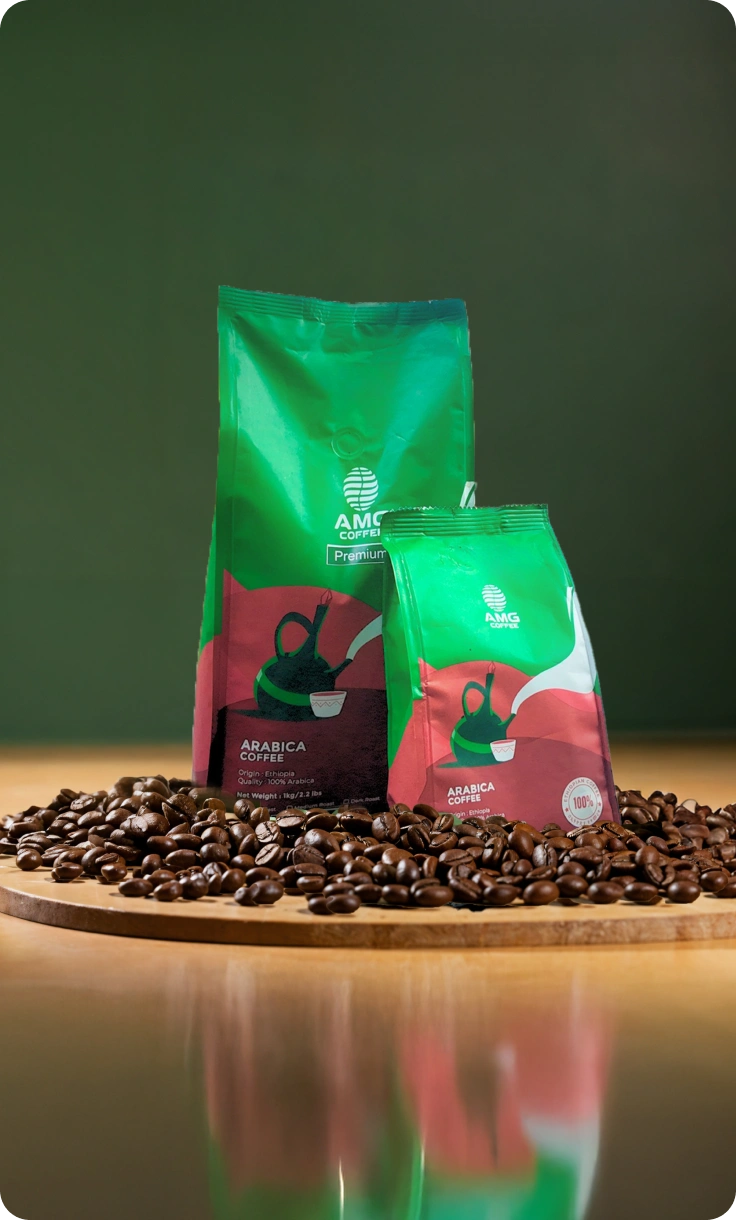
EUDR compliance requires more than selecting a reputable coffee exporter. Importers and roasters need reliable farm geolocation, traceable coffee lots, evidence of production legality and documentation that matches their role in the supply chain. Start collecting and checking these records before confirming orders, especially when coffee passes through several cooperatives or intermediaries. Sourcing from a trusted Ethiopian coffee export company, such as AMG Coffee Export, can help establish supplier communication and traceability processes. Review the European Commission’s latest EUDR guidance, country classification and product scope updates to ensure your sourcing procedures reflect the rules applicable to your business.